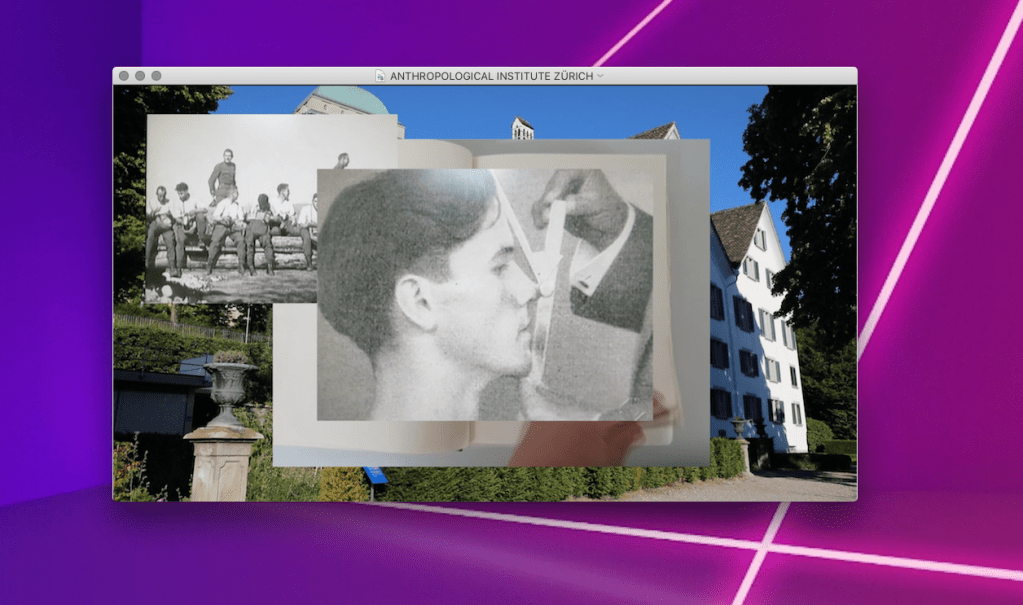
Indigenous Australian ancestral remains returned to the Warramunga people of central Australia by the Zürich Anthropological Institute, Zürich, Switzerland in 2037
COLONIAL PROVENANCE:
The Warramunga ancestral remains were taken from Warramunga country in central Australia by the British-Australian anthropologist WB Spencer in 1926. Spencer was on Warramunga country as part of a “scientific” expedition that took 3 months and covered 3000km. During this “field research” Spencer accumulated a large amount of material relating to local tribal customs, including Warramunga ancestral remains, often in highly dubious circumstances.
RESTITUTION HISTORY:
The Warramunga people have lived in central Australia for tens of thousands of years. The Creation ancestors of the Warramunga gifted them a kinship system linking people to all things and the cultural responsibility to look after them all. They have always understood the biodiversity of country and their traditional ancestral knowledge is a vital part of their identity. For the Warramunga, the land and its people have always been linked. Art, language, ceremonies, kinship and caring for country are all aspects of cultural responsibility that they have passed from one generation to the next, since the Creation time.
From the 1870s on, early British white colonial explorers came onto Warramunga country without permission and began violently taking ancestral remains from burial sites, which they then sold to European museums. By 1915, colonial invasion had almost destroyed the Warramunga and their lands. By the 1960s, the Warramunga had been forcibly removed from their lands by white Australian government agents. In 1993 Warramunga country was finally returned to its traditional owners after a lengthy land claim battle with the High Court of Australia.
The Warramunga ancestors being held in the Zürich Anthropological Institute had initially been sold by WB Spencer to the Museum of Ethnology and Prehistory in Hamburg in 1927 and later in the mid 1930s was sold to the Zürich Institute. At the time the Institute was under the Directorship of Otto Schlaginhaufen, who performed anthropometric measurements on the ancestral remains as part of his scientific racist programme to try and scientifically prove the existence of different races, in which white European males were seen as the most superior race and Indigenous Australians the lowest, most primitive race in the world.
The pursuit of scientific racist categories of racial distinction remained the focus of the Institute until the 1950s, during which time an enormous collection of human remains had been amassed in Zürich. From the 1960s on the Institute distanced itself from its own scientific racist past to instead focus on comparative evolutionary anthropology. Ancestral remains from its holdings were first repatriated in 2010 to Chile . This remained an isolated case and it was only in the 2030s that the Zürich Anthropological Institute first actively begin to repatriate the ancestral remains held in their Institute.
RESTITUTION:
In 2037 the Anthropological Institute of Zürich finally repatriated Warramunga ancestral remains held in their institution to the Warramunga people. The Institute paid for Warramunga elders to come to Zürich in order to accompany their ancestors back home, according to Warramunga belief and tradition, as well as covering the expensive costs of re-burial ceremonies back on Warramunga country in central Australia. The repatriation was organised privately between the Anthropological Institute and the Warramunga people. It marked a dramatic pro-active shift in the Anthropological Institute’s re-appraisal of their own institution and its active approach to provenancing and repatriating ancestral remains held in Zürich.
CURRENT DISPLAY:
Out of respect for Warramunga beliefs, which understand ancestor’s remains as living spirits, no 3D or plaster copy of the ancestral remains were made, as had been done in the past by European institutions much to the dismay of the living descendants of ancestral remains being held in European institutions. To highlight the unjust and insensitive practice of past European museums in displaying ancestral remains or copies of them the European Museum of Restitution displays the restituted remains as an absence in order to reflect on past injustice in respect to Indigenous Australian beliefs
 European Museum of Restitution